Senin, 31 Agustus 2009

Strange perspective

I mentioned here that I was originally planning on writing my Norse story (Now titled 'Gods of Asgard') in two parts. Part I would detail the events leading up to Balder's death and Part II would focus on the imminent war.

I then decided that rather than invent a lot of story to fill the majority of a second movie, I'd put them both together. But that wasn't working at all - everything seemed rushed and littered with forced exposition. I needed more time and space to set up the war. So I went back to my original plan of two movies.

Famously, people have great difficulty spotting errors in their own work, whether it's typos in an essay or story problems in a script. But someone else (who has no predisposed thinking of the concept) can instantly spot the problems.

'Gods of Asgard' is essentially a retelling of Norse myths so most of the plot was already set in place. I say plot because we know next to nothing about the characters and characters are what make a story. There are touches of plot here and there that I created (usually as a result of character relationships) but for the most part, I was working with someone else's story.

That gave me the stranger's perspective - I was able to spot what wasn't working and why. I messed around with characters (introducing some earlier and some later) and moved a whole subplot from Part I to Part II. I also took a lot of creative liberties with the finale. In Norse legend, all the major players are killed in the final battle. No-one likes that! We need at least one person to survive! And some of my major characters feature very little in the Prose Edda (my source material), so their fates were never revealed in myth.

Anyway, the point is that I was able to get that rare perspective - a perspective you only ever seem to get from looking at someone else's work. That's what makes a great storyteller - the ability to notice and rectify errors in the story itself. The ability to be completely neutral and objective, having no loyalties to favourite characters or plot elements. I managed it!

But of course this was - in part - someone else's story, so I'm not convinced I've yet completely mastered the art of objective story editing. Fingers crossed.

'Gods of Asgard' Parts I & II now come to a lovely 18 pages so whenever I like, I can attack a blank script page. Then comes the fun.......

Sabtu, 29 Agustus 2009

Take your craft seriously......

......if you want to be in the top 1% and sell that screenplay you've been working on for years:

"Write great scripts, with original story concepts, play the marketing game, and it seems to me that a spec script sale will be imminent.

Are you taking this craft seriously?

Are you:

  • writing daily, several pages?
  • constantly brainstorming story concepts, coming up with high concept loglines?
  • reading all the books on screenwriting you can get your hands on, regularly?
  • reading screenplays of movies in the genre you are writing?
  • participating in a local screenwriters group, or at least networking with other serious writers?
  • structuring your stories, beating out the scenes before typing FADE IN?"

Jumat, 28 Agustus 2009

Script-a-week & treatment workshop

Since putting a chart on my door where I can tick off each hour I write, I've decided to jump head-first into my writing. Being able to cross off a little square after every hour of uninterrupted* work is a great way to motivate yourself. How many hours have you spent writing this week? If you don't know, consider using a chart. It also helps you write at least one hour every day, because looking at a blank column is horrifying! Just shade off days you know you can't write and focus on the others.

They say the best thing we can do as writers is read scripts. Most people will know about this, but there's a blog where you can download at least one script a week - Script Collector. Entirely made up of PDF scripts, he has a wide variety, including 'Pulp Fiction', 'Saving Private Ryan', 'Changeling', 'Donnie Darko', 'Star Trek' (2009), 'Die Hard' 'Fight Club' 'Inglourious Basterds' and much much more. So now there's absolutely no excuse for not being able to find scripts.

Yesterday, I set myself up with a script a week until Christmas. Ask me what I'll be doing week beginning 16th November and I'll say I'm reading Ed Norton's 'The Incredible Hulk' screenplay. Again, putting this up on the door is a great way to keep you focused on the week's goals. I'm also adding something similar to my blog so I can never forget.

In other news, I'm travelling to London on Saturday 12th September to attend Charles Harris' treatment workshop. At £85, it may seem expensive, but if you take a look round, you'll see it's really not!

As you all know, treatments are one of the first ways of getting your script made. Without a decent treatment, it doesn't matter how good your script is.

The workshop starts at 10:30 and finishes at 5:30. During the day we'll learn about:
  • The requirements of a successful treatment
  • Choice of vocabulary, language patters and structures
  • The traps that treatment writers must avoid
  • Nine vital steps towards writing an exciting treatment
  • Using story sentence, inner story, character constellation
  • The step outline
  • The masterpiece treatment
We'll also receive a pack containing top treatments and synopses.

The course looks really interesting and valuable. It'll be a long, hard day, getting up at 6am to get to London then not getting home till late, then working the following......snore.........

*wakes up*

There aren't many places left, so scoot over here pronto to book your place.

Over on ScriptXray, there's a list of 100 screenwriting tips. Goes without saying - a valuable resource!

Finally, for instant writing inspiration, fly on over to Marvin Acuna's site and watch this quick video which tells you what never to say to someone.....

There's a line in Metallica's 'Don't Tread On Me' that goes:
To secure peace is to prepare for war!
I have my own version:
To become a successful writer, write your fucking arse off!
Granted it's not quite as poetic, but you get the point!

Happy writing fellow scribes :)

PS: Is anyone else already booked on/planning on going? Let me know!


* Uninterrupted means not checking facebook,
myspace, the blog, e-mails, or twitter!!!

Kamis, 27 Agustus 2009

This week's Norse musings

It's been a funny seven days. I started off doing very well. On Saturday, I decided to reboot an idea I had a while ago. As some of you will know, I'm a huge fan of the Classics (note the capital C meaning ancient times of Greeks and Romans). I've often considered setting a film in those times, maybe adapting Homer's The Odyssey or The Illiad. But both have been done fairly recently and it's practically impossible to do The Odyssey justice without having a 4 hour film.

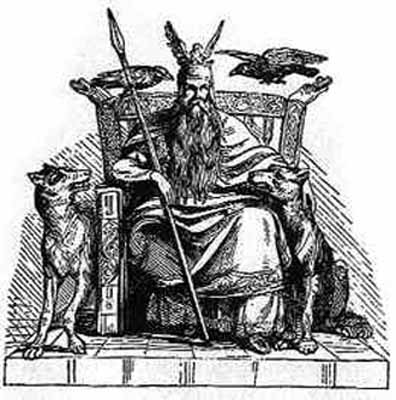
So I turned my attentions to another interest of mine - Norse mythology. Most people have heard of Thor, Odin, Loki and several other Norse gods, but I think their stories are yet to be told through the world of film. So I got to work.

I read the Prose Edda online. If there was such a thing as a Norse bible, this would be it! It's not an easy read, but fortunately, once you've battled through some Old English texts, you manage. I soaked it up, making notes on everything that happened and what I thought it meant. Then I read Norse Myths: Gods of the Vikings by Kevin Crossley-Holland. For anyone interested in Norse mythology, I highly recommend his book - his writing style is poetic and he explains things clearly.

In truth, I think I'd decided before all this what story I would tell. But after reading, I was certain where to start. A quick overview for anyone unaware:

It's was prophesied that the death of Balder (Odin's son) would trigger Ragnarok (the final battle in which everyone dies and all worlds are destroyed). Loki (god of mischief) did his usual thing and stirred up trouble. He killed Balder. Ragnarok began.

Pretty basic stuff really. But as usual, the clever stuff comes in the how and why as opposed to the events themselves. Scholars have said different things about the death of Balder - what did it mean? Could it be avoided? Should it be? Who is really to blame for Ragnarok? I have my own theories, but they're secret! *

Anyway, this week I got to work planning the events leading up to Balder's death. It was easier than I thought - a case of writing what we are actually told then deciding what creative liberties to take. Add a lot of characterisation and theme and you've got a solid story.

I had originally planned to write the story in two parts. Part one would show the events leading up to Balder's death and the death itself. Part two would then detail the war that followed. But I was struggling to think of enough of a story for part two. After talking with Michelle, I decided to slam it all in one film. Granted it would come to over 3 hours, but I think it could work.

As things stand, I'm struggling. I'm trying to get everything in there and pad it all out without it seeming forced. I'm also adding a fair few original characters to give alternative perspectives on events.

I'm sure it will all click eventually but it's so hard to get my head around! After starting off so well, I've come to a grinding halt. It's frustrating but shit happens. I just need to keep attacking it and trust that I'll find my groove again.

When I'm writing and everything is working, I'm as happy as a Viking in Valhalla, but when things don't quite go as planned, it feels like I've been hit by the mighty Mjollnir! I'm sure you all know how I feel (using your own cocky metaphors).

Production-wise, it's not very practical. This is a story with frost giants, massive wolves, gods, huge landscapes, epic battles, a journey into Hel and a snake big enough to wrap itself round the world! Needless to say, a budget of millions would be needed.

I thought about computer animation. That would lower the cost but as it turns out, not considerably. One animation company I spoke to said this:
I would love to get involved in this; and as soon as I have 20 or 30 million pounds at my disposal I shall move forward on it.
But I'm not giving up. I'm still pursuing computer animation companies and if nothing comes of it, the worst case scenario is that I write it and use it as a calling card.

Anyway, I have tomorrow and Saturday to work on it because from Monday, I'll be carrying on with 'Exile'.

Happy writing, scribes!

*See the 200 page script


Update: I have now decided to go back to the original plan and make this into two scripts. It's a gamble, but worse case scenario - I have to merge them together.

Senin, 24 Agustus 2009

Weekly Interview (10)

This is a hardcore video from Robert McKee's Story seminar. Here, he talks about the importance of setting and the limitations and possibilities of the worlds you create. To make sure you get a handle on what he's saying, make sure you watch at least three times! Listening to him talk, you learn at least one thing - do not argue with Bob McKee about story!

Jumat, 21 Agustus 2009

'EXILE' - part 1

A while ago, I talked about doing a series of posts detailing my writing methods through a feature script. Alas I got sidetracked (which is not uncommon for me). However, with the idea I'm working on at the moment, it's impossible for me to get sidetracked, because it's for uni.

So here I am, talking through how I go about writing a feature script. A year ago I came up with the basic idea and wrote a (very rushed and consequently poor) script. Now I've taken that idea and expanded.

I've just finished writing the synopsis for 'EXILE'. It's essentially a rough, prose version of the story, with no dialogue and very little detail. It comes to a hefty 12 pages (7500 words) which is very long for me. But it should make the scriptwriting considerably easier.

Now I'll make revisions to the story, theme and characters (I expect to remove a few) and try and work out how long (screen time) that'll be. The plan is to take the synopsis and work it into a very rough scene breakdown. Obviously, from there I'll know how many scenes I have and roughly how long each one will take on screen. If it's too much or too little, I'll get to work expanding the story.

All this might take some time because I want to get opinions before rushing on with things. Primarily I'll be getting the advice from my tutor Linda-Lee. After all, she'll be the one helping most and marking the damn thing!

Rabu, 19 Agustus 2009

Do you want over 40 hours of screenwriting lessons?

If you answered 'yes', read on!

I've spent a lot of time recently watching episodes of TV written and/or directed by Tim Minear. Most people out there will know the name - he's written loads for Joss Whedon, namely 'Angel', 'Firefly' and 'Dollhouse'. The thing you'll notice about Tim's work is how tense it is - every single scene seems to have great amounts of character tension. Sorry, the first thing you'll notice about Tim's work is his love for slo-mo - something he uses with amazing effect!

Here's one scene with semi slow motion and it works great, adding depth and emotion to the moment.

Anyway, I was listening to the commentary to 'Lullaby' ('Angel' season 3), which Minear wrote and directed. There are some great insights into the writing process and some great tips (like how rain can improve a scene). You also might want to transcribe everything he and fellow writer Mere Smith say, as it's fucking hilarious!

Joss Whedon is a fine writer. And he has an amazing ability - he finds writers just as good as himself - the best of the best. On the DVD boxsets (of 'Buffy', 'Angel' and 'Firefly') there are many commentaries from the writers and directors.

Even if vampires or spaceships aren't your thing, you should definitely buy the DVDs. If for no other reason than you're guaranteed a few hours of screenwriting lessons for every season*

So get buying! I see writer's commentaries as one of the greatest sources for information and you should too!

*Number of commentaries in Whedon's box sets:

'Buffy' season 1 = 2
'Buffy' season 2 = 4
'Buffy' season 3 = 4
'Buffy' season 4 = 6
'Buffy' season 5 = 4
'Buffy' season 6 = 6
'Buffy' season 7 = 7

'Angel' season 1 = 2
'Angel' season 2 = 2
'Angel' season 3 = 3
'Angel' season 4 = 7
'Angel' season 5 = 7

'Firefly' season 1 = 7

That comes to a grand total of 61 commentaries from three TV shows. Each commentary lasts 40 minutes (an hour and a half in the case of one) so 60 x 40 = 2400 minutes = 40 hours + 1.5 hours = 41 hours 30 minutes.

Yes, that's over 41 hours of screenwriting lessons! I think you know what to do!